


- Science
- October 3, 2025
- 158
- 7 minutes read
The Next Giant Leap: Your Ultimate Guide to the Artemis III Moon Landing


For the first time in over fifty years, humanity is going back to the Moon. This isn’t science fiction; it’s the Artemis III mission, NASA’s monumental effort to land astronauts on the lunar surface, including the first woman and the first person of color. As the launch window approaches, global anticipation is reaching a fever pitch, with billions ready to witness the next “one small step.”
But Artemis III is more than just a repeat of the Apollo missions. It’s a brand-new chapter in human exploration, powered by groundbreaking technology and aimed at an entirely new, unexplored region of the Moon. This is your definitive guide to understanding the mission that will define a generation.
What is Artemis III? The Mission at a Glance
Artemis III is the first crewed lunar landing mission of NASA’s Artemis program. Its primary goal is to land astronauts at the lunar south pole, a region never before visited by humans. The mission will last approximately 30 days, with the crew spending about a week on the Moon’s surface, conducting scientific research and technology demonstrations.
Mission Objectives:
Land the first woman and first person of color on the Moon.
Search for and analyze water ice, a resource crucial for future long-term habitation.
Test the technologies needed for a sustainable human presence on the Moon.
Serve as a critical stepping stone for future crewed missions to Mars.
Meet the Crew: The New Faces of Lunar Exploration
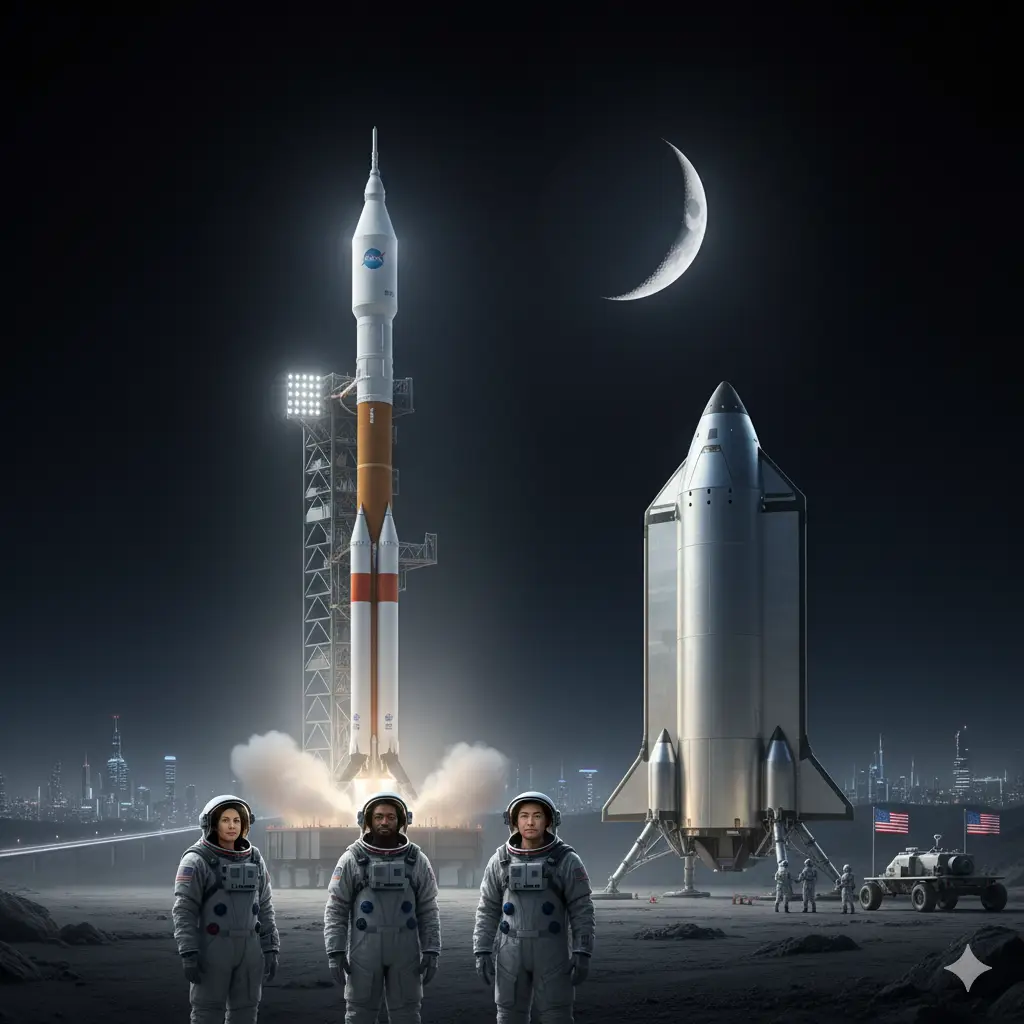
While the full four-person crew is subject to a final announcement, NASA has confirmed its makeup will be historic. The astronauts selected for this mission are drawn from a pool of the most experienced and qualified individuals in the world, all of whom have undergone years of intensive training. They represent a new era of explorers, building on the legacy of Armstrong and Aldrin while reflecting the diversity and collaborative spirit of 21st-century spaceflight.
The Groundbreaking Technology Making It Possible
Artemis III is powered by a new generation of spacecraft that dwarfs the Apollo-era hardware.
1. The Space Launch System (SLS) Rocket
The SLS is the most powerful rocket ever built. This super heavy-lift launch vehicle is the only rocket capable of sending the Orion spacecraft, astronauts, and their cargo directly to the Moon in a single mission.
2. The Orion Spacecraft
Orion is the crew’s home and command center for the journey. It’s a state-of-the-art exploration vehicle designed for long-duration deep space missions, equipped with life support and navigation systems far more advanced than the Apollo command module.
3. The SpaceX Starship Human Landing System (HLS)
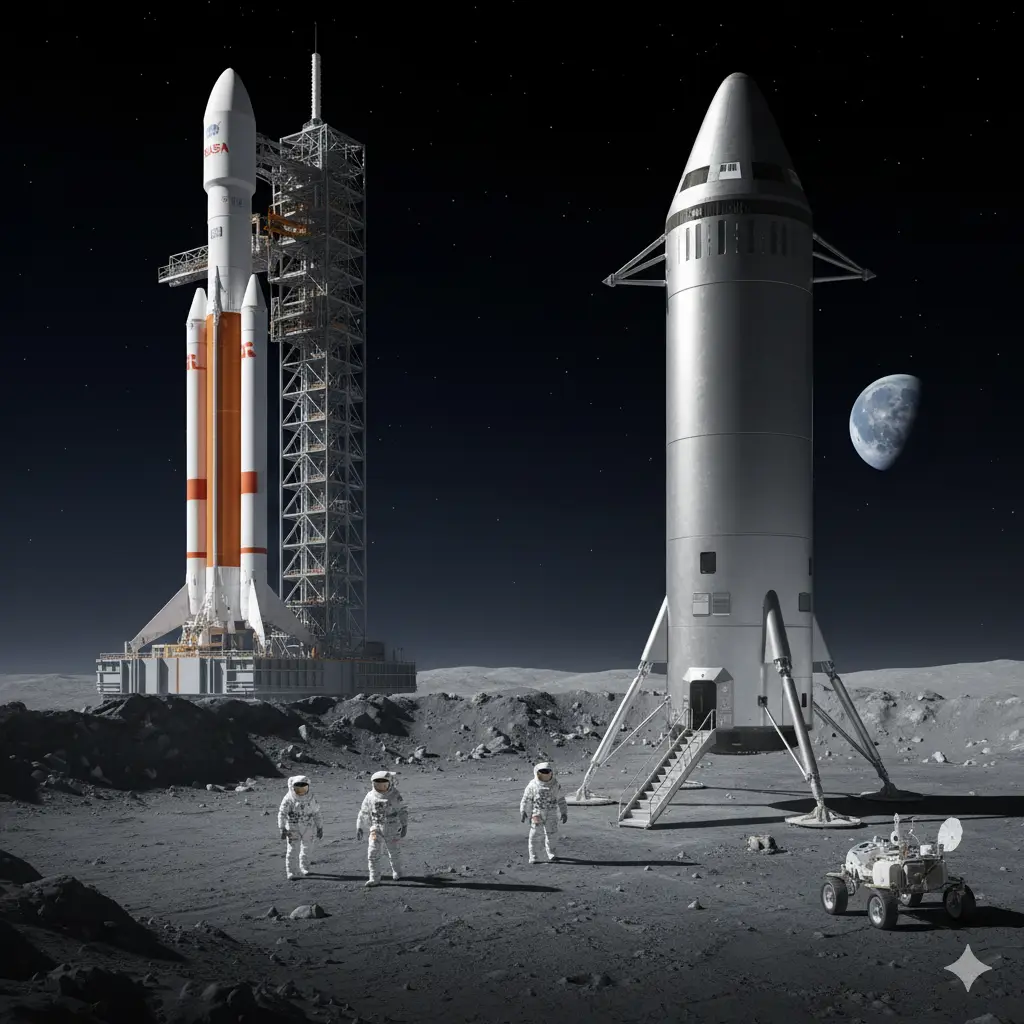
In a revolutionary departure, NASA has contracted SpaceX to provide the lunar lander. The Starship HLS will be a specialized version of SpaceX’s massive Starship rocket. It will meet the Orion spacecraft in lunar orbit, carry the astronauts down to the surface, and serve as their habitat and base of operations on the Moon before returning them to Orion.
Destination: The Lunar South Pole
Unlike the equatorial Apollo landing sites, Artemis III is targeting the Moon’s south pole for one critical reason: water. Scientists believe that craters in this region, which have been permanently shadowed from sunlight for billions of years, contain vast deposits of water ice.
Harnessing this ice would be a game-changer. It could be:
Melted for drinking water.
Separated into oxygen for breathing.
Converted into hydrogen and oxygen for rocket fuel.
Finding and learning to use this water is the key to building a permanent lunar base and making future missions to Mars a reality.
Conclusion: More Than a Landing, It's a Beginning
The Artemis III moon landing is a pivotal moment for humanity. It represents a new era of collaboration, innovation, and ambition. It’s about looking to the stars not just as a destination, but as a place to stay, to learn, and to prepare for our next giant leap to the Red Planet. The world will be watching as the next set of footprints are pressed into the lunar dust, symbolizing the beginning of our future as a multi-planetary species.
Frequently Asked Questions (FAQ)
Q1: When is the Artemis III moon landing?
A1: The official launch for Artemis III is targeted for the 2025-2026 timeframe. The exact date is dependent on the successful completion of the preceding Artemis II crewed flyby mission.
Q2: Who will be the first woman to walk on the Moon? A2: NASA has not yet officially named the astronaut, but it will be one of the experienced female astronauts from the Artemis team. The crew will be announced closer to the mission date.
Q3: How is Artemis III different from the Apollo missions?
A3: Artemis III uses entirely new, more powerful technology (SLS, Starship), targets the scientifically crucial lunar south pole instead of the equator, has a primary goal of finding water ice, and is designed to be the first step toward a sustainable, long-term human presence, not just a temporary visit.


 English
  Turkish