


- News
- October 1, 2025
- 344
- 9 minutes read
Gaza Peace Framework: An Expert Analysis of a Viable Plan

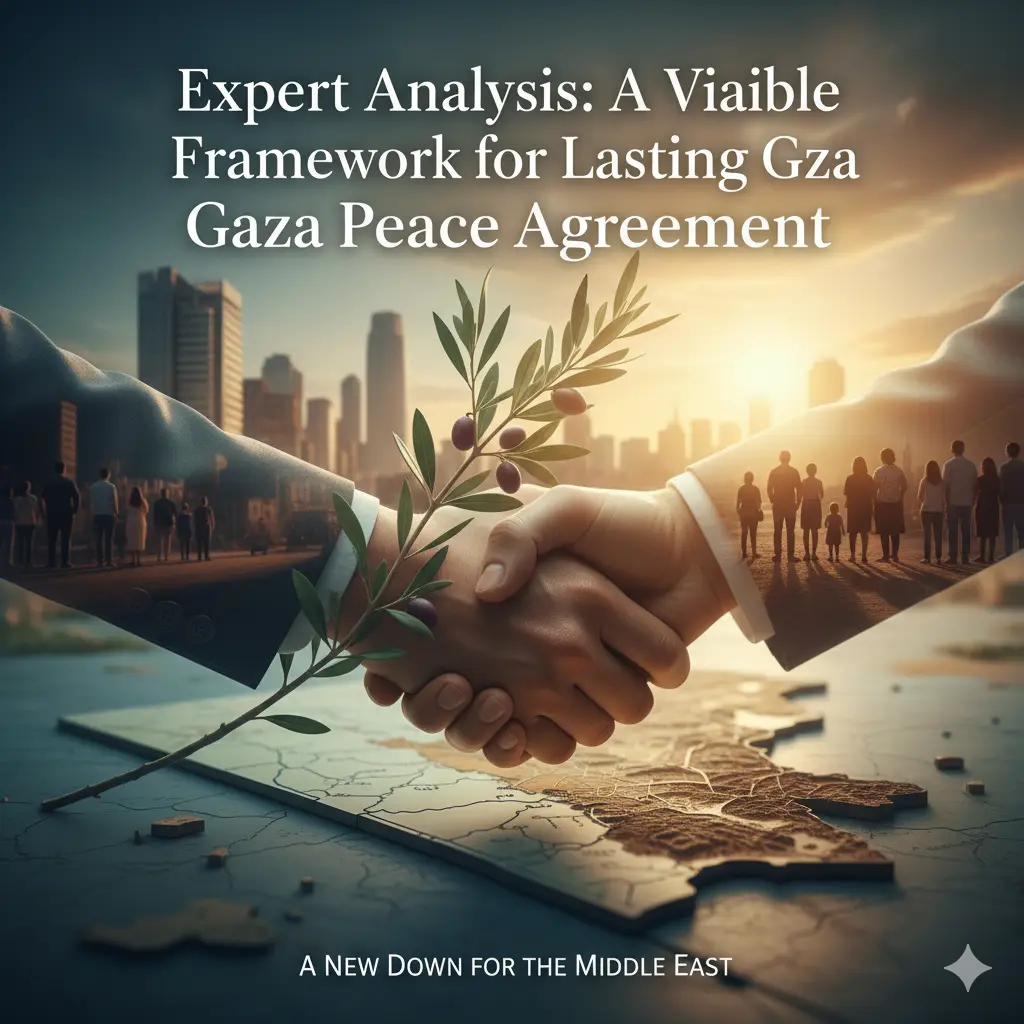
The relentless cycle of violence in Gaza, punctuated by fragile, short-lived ceasefires, underscores a stark reality: a lasting resolution requires more than a temporary pause in hostilities. It demands a comprehensive, multi-layered framework that addresses the core drivers of the conflict. Drawing on analysis from institutions like the International Crisis Group, the Atlantic Council, and the United States Institute of Peace, we can synthesize the essential pillars of a viable, long-term peace agreement.
This is not a hypothetical wish list, but a pragmatic breakdown of the interlocking components that international mediators and policymakers consistently identify as non-negotiable for sustainable peace and security for both Israelis and Palestinians.
Phase 1: The Immediate Imperatives - Ceasefire and Humanitarian Stabilization
The first and most urgent phase, as emphasized in virtually all expert analyses, revolves around de-escalation and addressing the catastrophic humanitarian crisis.
Ceasefire Mechanics and Detainee Exchange
A durable ceasefire must be clearly defined and internationally monitored. Key components include:
A Monitored Cessation of Hostilities: A complete halt to all military actions, overseen by a neutral third-party mechanism (e.g., sponsored by Egypt, Qatar, and the U.S.) to verify compliance and de-escalate incidents.
Phased Hostage and Prisoner Release: A structured, reciprocal exchange is a precondition for any progress. This is often the most emotionally and politically charged element, requiring careful negotiation on ratios and timelines.
Unfettered Humanitarian Surge
Humanitarian relief cannot be a bargaining chip. According to relief organizations like ACAPS and UN bodies, stabilization requires:
Guaranteed Access: The opening of all crossings to allow for a massive, unimpeded flow of aid—food, water, fuel, and medical supplies—to all parts of Gaza.
Restoration of Critical Infrastructure: Prioritizing the repair of hospitals, water treatment plants, and the electrical grid is essential to prevent further loss of life from disease and privation.
Expert Insight: Analysts at the Wilson Center note that the success of this phase hinges on creating a robust deconfliction mechanism between humanitarian agencies and military forces on the ground to ensure aid can be delivered safely and without interference.
Phase 2: The Architecture of Post-Conflict Governance and Security
This is the most complex phase, addressing the “day after” scenario in Gaza. Without a clear and agreed-upon plan for governance and security, any ceasefire is doomed to collapse.
A New Governing Authority
Expert consensus points to the need for a legitimate and capable governing body that is not Hamas. The leading proposals, analyzed by institutions like the International Institute for Strategic Studies (IISS), include:
A Technocratic Transitional Government: A temporary administration composed of apolitical Palestinian experts to manage civil services and oversee initial reconstruction.
Revitalization of the Palestinian Authority (PA): The long-term goal for most international actors is the return of a reformed and credible PA to govern both the West Bank and Gaza, reunifying the Palestinian political entity. This, however, requires significant internal reforms within the PA to gain legitimacy among Gazans.
A Multi-Layered Security Framework
Security for both Israelis and Palestinians is paramount. A sustainable model involves:
International or Regional Peacekeeping Force: A robust, UN-mandated (or regionally led) force with a clear mandate to monitor borders, prevent weapons smuggling, and ensure the terms of the agreement are not violated.
Demilitarization Linked to Reconstruction: Tying the pace and scale of reconstruction directly to the verifiable disarmament of militant groups.
The Atlantic Council has analyzed proposals where reconstruction aid is conditional on neighborhoods being free of weapons, creating internal incentives for compliance.
Expert Insight: Analysts at the Centre for Strategic and International Studies (CSIS) emphasize that a purely technical security arrangement is doomed to fail. They argue that the success of any international force or border monitoring mechanism is entirely dependent on the establishment of a legitimate and capable Palestinian political authority. Without a credible local partner to handle civil administration and law enforcement, any external security mission risks being perceived as an occupation, ultimately undermining its own objectives.
Phase 3: The Political Horizon - Reconstruction and a Path to Statehood
The final phase must provide a tangible and hopeful future. Economic viability and a clear political path are crucial to preventing a return to conflict.
The International Reconstruction Effort
Rebuilding Gaza is a monumental task requiring a transparent and efficient mechanism.
Key elements identified by the World Bank and other development bodies include:
An International Trust Fund: A fund managed by an international body to ensure donations are used for their intended purpose, preventing diversion and corruption.
Lifting the Blockade: A phased removal of economic restrictions, synchronized with security benchmarks, is essential for any meaningful economic recovery and to allow for the import of necessary reconstruction materials.
Reviving the Two-State Solution
While its viability is heavily debated, most expert analysis concludes that the ultimate goal of a sustainable peace must be anchored in a political solution.
-
A Credible Path to Statehood: The agreement must connect the “day after” in Gaza to a renewed, time-bound diplomatic process aimed at establishing an independent, viable Palestinian state alongside Israel.
-
Regional Integration: As noted in analyses of the Abraham Accords and other regional trends, leveraging the involvement of Arab states to provide security guarantees and economic incentives for both sides is critical.
Expert Insight: The UN Secretary-General recently emphasized that without a clear political horizon toward a two-state solution, any plan for Gaza will simply be managing the conflict, not resolving it. The relentless expansion of settlements in the West Bank is cited as the primary threat to this possibility.
Conclusion: From Fragile Truce to Durable Peace
A sustainable peace agreement for Gaza is not a single document but a complex, phased process. It requires immediate humanitarian action, a fundamental restructuring of governance and security, and a long-term commitment to economic reconstruction and a viable political endpoint. While immense obstacles and deep-seated mistrust remain, the frameworks consistently put forward by leading conflict resolution experts offer a clear, albeit difficult, path forward. Success will depend on unprecedented political will from the parties themselves and sustained, unified pressure from the international community.


 English
  Turkish